Cycling Is Back: Undeniable Enthusiasm at Cycling World in Düsseldorf
Written by :
Wyatt Wees
Posted on :
Marzo 23, 2026
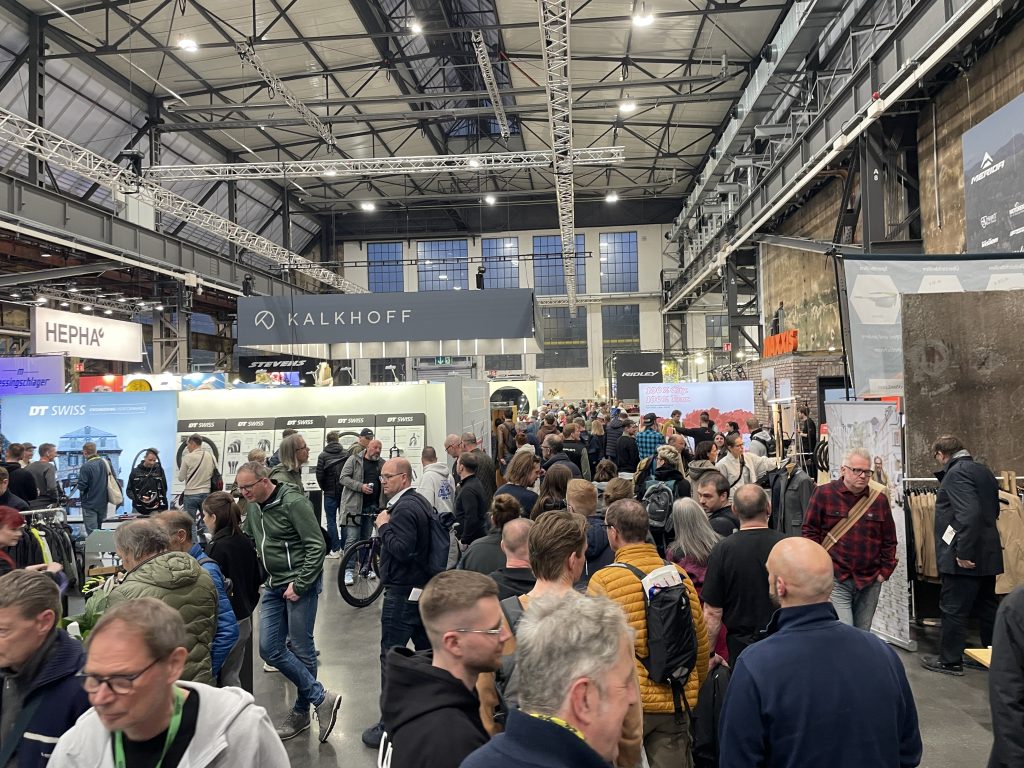
While the broader trade show landscape for cycling continues to shift, something undeniable happened this past weekend in Düsseldorf: the bikes came out, the crowds showed up, and the enthusiasm was real.
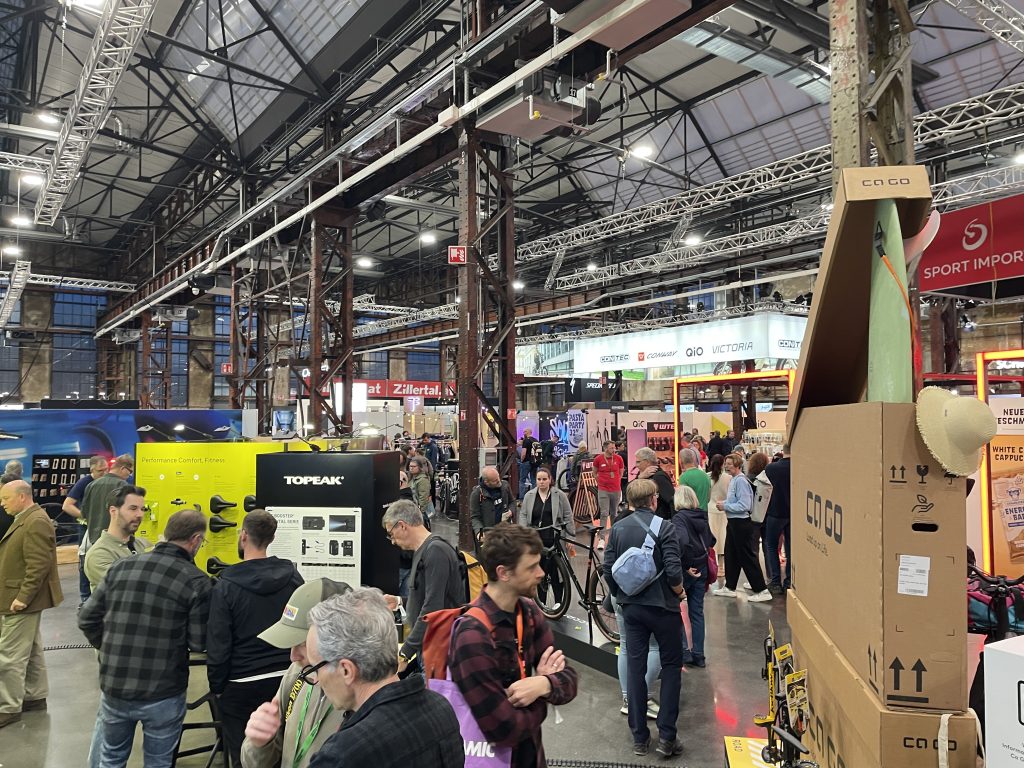
Cyclingworld Europe wrapped up its 2026 edition on March 22nd, and the numbers tell a story that is hard to argue with. Nearly 35,000 visitors passed through Areal Böhler — up sharply from 27,000 the year before — and with the addition of the new Urban Hub activation in Düsseldorf’s city centre, total attendance across all touchpoints reached approximately 50,000 people over three days. For an industry that has spent the better part of two years navigating inventory corrections, brand collapses, and a chilly retail environment, that is a meaningful signal.
This was not a show held together by inertia. The energy was genuine. Test tracks were busy. Gravel rides, a Brompton race, cross competitions, and children’s skills clinics gave the event a festival quality that trade shows in this category often struggle to manufacture. More than 6,000 test riders completed roughly 20,000 registered test rides — an increase of nearly 67 percent compared to the previous year. People came to ride.
A Contrast Worth Examining: Cyclingworld vs. Eurobike
To understand why Cyclingworld’s momentum matters, you have to look at it against the backdrop of what is happening elsewhere in the European cycling trade show landscape — most notably with Eurobike in Frankfurt.
Eurobike has historically been the industry’s flagship event, the kind of gathering that shaped trends and defined the calendar. But it has faced mounting pressure in recent years, and the signals are difficult to ignore. Shimano — one of the most foundational names in the global cycling industry — stepped back from exhibiting at Eurobike, a move that sent a visible ripple through the trade. For brands calculating where to invest their limited event budgets, that kind of absence carries weight.
The contrast between the two shows comes down to three structural factors that deserve honest examination:
- Timing
Cyclingworld takes place in late March, right at the inflection point between winter and spring — the precise moment when cyclists are itching to ride, retailers are placing final orders, and the industry’s energy is building rather than winding down. Eurobike, by contrast, runs in the summer, deep into the selling season. For a consumer-facing show, summer timing can work. But for a B2B audience that needs to make buying decisions and plan campaigns, the spring window is simply more actionable. Exhibitors at Cyclingworld described the timing as feeling like the natural start of something, not a pause in the middle of it.
“For HP Velotechnik, Cyclingworld was a tremendous accelerator right into the cycling season. After the long winter, timing, location, atmosphere and visitors’ enthusiasm — everything came together perfectly.”
— Alexander Kraft, Press Officer, HP Velotechnik
- Cost
Booth costs at Cyclingworld run at roughly one-third of what brands pay for equivalent presence at Eurobike. In a market where brands are scrutinising every line of the marketing budget and asking hard questions about ROI, that delta is not trivial. It opens the door for smaller, independent, and emerging brands that would otherwise be priced out of serious trade exposure — and it lowers the stakes for larger brands trying new product formats or smaller footprints.
The result is a more diverse exhibitor mix. Around 500 brands participated in 2026, with roughly a quarter coming from outside Germany without a domestic subsidiary. The affordable entry point is, at least in part, what makes that international breadth possible.
“The fair strikes an excellent balance, allowing smaller manufacturers to present themselves on equal footing with major players.”
— Clemens Kircher, Founder and Managing Director, Iumentum Cargo Cycles
- Format: Consumer + B2B Together
Perhaps the most consequential difference is structural. Cyclingworld is not a pure trade show, and it is not a pure consumer event. It is both, simultaneously — and that hybrid model is proving its value.
The show drew approximately 4,000 trade visitors alongside tens of thousands of consumers. That combination creates a qualitatively different experience: brands are not presenting products to an audience of industry insiders in a vacuum; they are watching real consumers react in real time. Test rides happen. Conversations happen. The feedback loop is immediate and visible. For brands trying to understand whether a new product concept has legs with actual end users, that kind of environment is worth more than any focus group.
Scott Sports described Cyclingworld as “a central meeting point for the cycling industry” — language that would once have been applied almost exclusively to Eurobike. The fact that it is now being used to describe Düsseldorf in March says something important about where the weight of the industry is shifting.
The Urban Hub: A Smart Experiment
One of the more interesting moves Cyclingworld made this year was the launch of the Urban Hub — a satellite activation in Düsseldorf’s city centre, separate from the main Areal Böhler venue. More than 15,000 people attended this component alone, including over 500 cyclists who joined a RadRave ride through the city with DJ Dom Whiting, ending at the main show grounds.
It is easy to dismiss activation events like this as marketing spectacle, but the logic is sound. If cycling is genuinely a lifestyle and mobility force — not just a sport or a hobbyist niche — then the show that treats it as one will capture something the purely transactional trade format misses. The Urban Hub brought cycling into the city in a literal sense, and the turnout suggests the appetite was real.
A Signal Worth Taking Seriously
The cycling industry has had a difficult few years. High-profile collapses, cautious retailers, and the inevitable hangover from pandemic-era demand inflation made 2023 and 2024 genuinely hard. The temptation in that environment is to read any positive signal sceptically — to assume the enthusiasm is noise rather than trend.
But Cycling World 2026 is harder to dismiss than that. The attendance growth is real. The test ride surge is real. The exhibitor satisfaction, the Urban Hub crowd, the international brand participation — these are not manufactured metrics. They reflect a category that still has genuine cultural momentum and consumer pull, even when the financial headlines have been rough.
The show’s formula — manageable cost, spring timing, blended B2B and consumer audience, a location with lifestyle cachet — is resonating in a way that the larger, more expensive, more purely trade-oriented format seems to be struggling to match.
If you are a cycling brand, or a distributor trying to read the room on where to invest your attention and your euros in the European market, Düsseldorf in March is increasingly the answer. The enthusiasm this past weekend was not manufactured. It was undeniable.
Like this content? Sign up for the ‘Business of Cycling’ newsletter and receive updates right in your inbox.